Piolets d'Or - 2026 Awarded ascents

2026 Awarded ascents

Ultar Sar (7,388m), Pakistan Karakoram
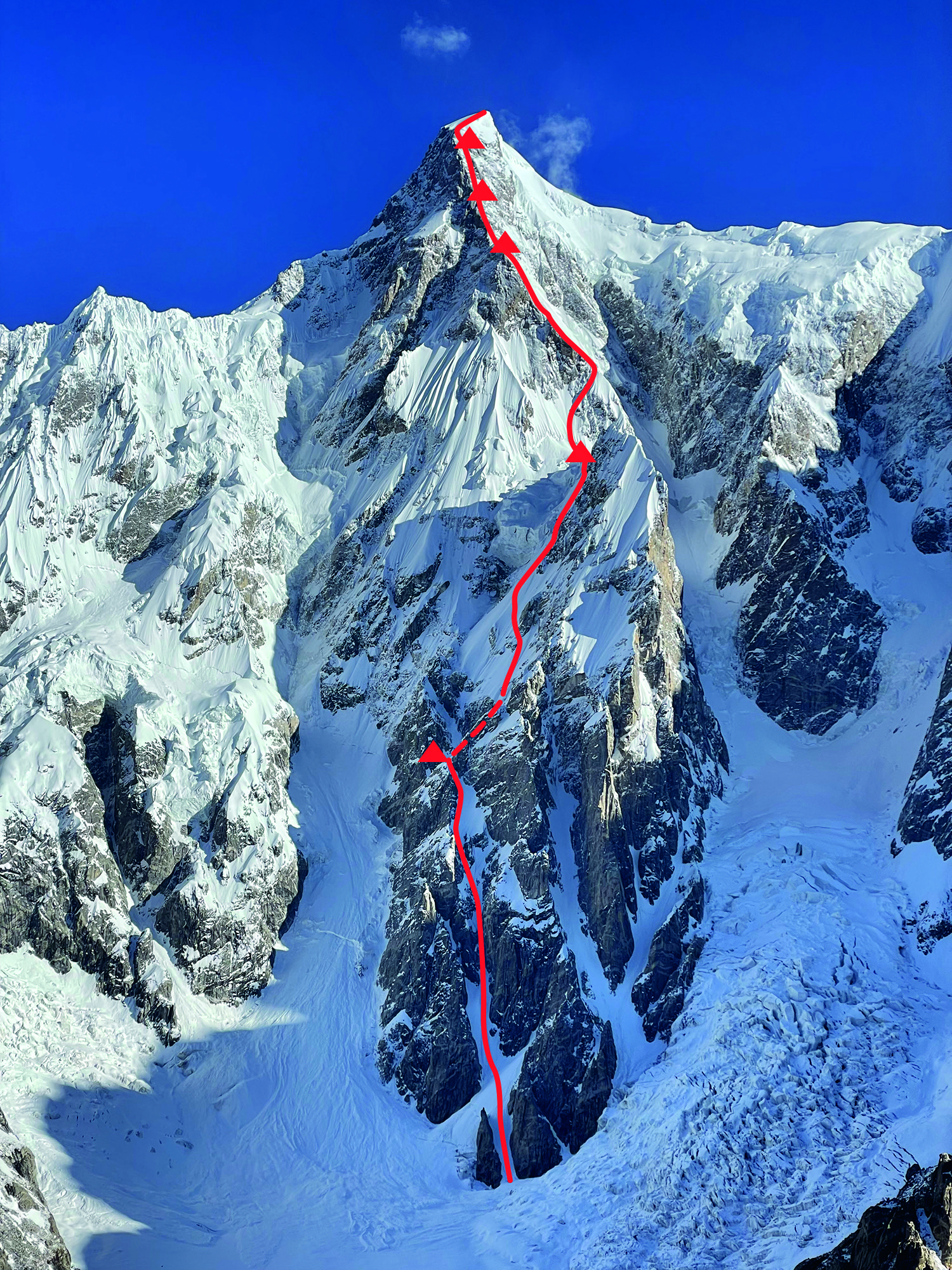
©Berman

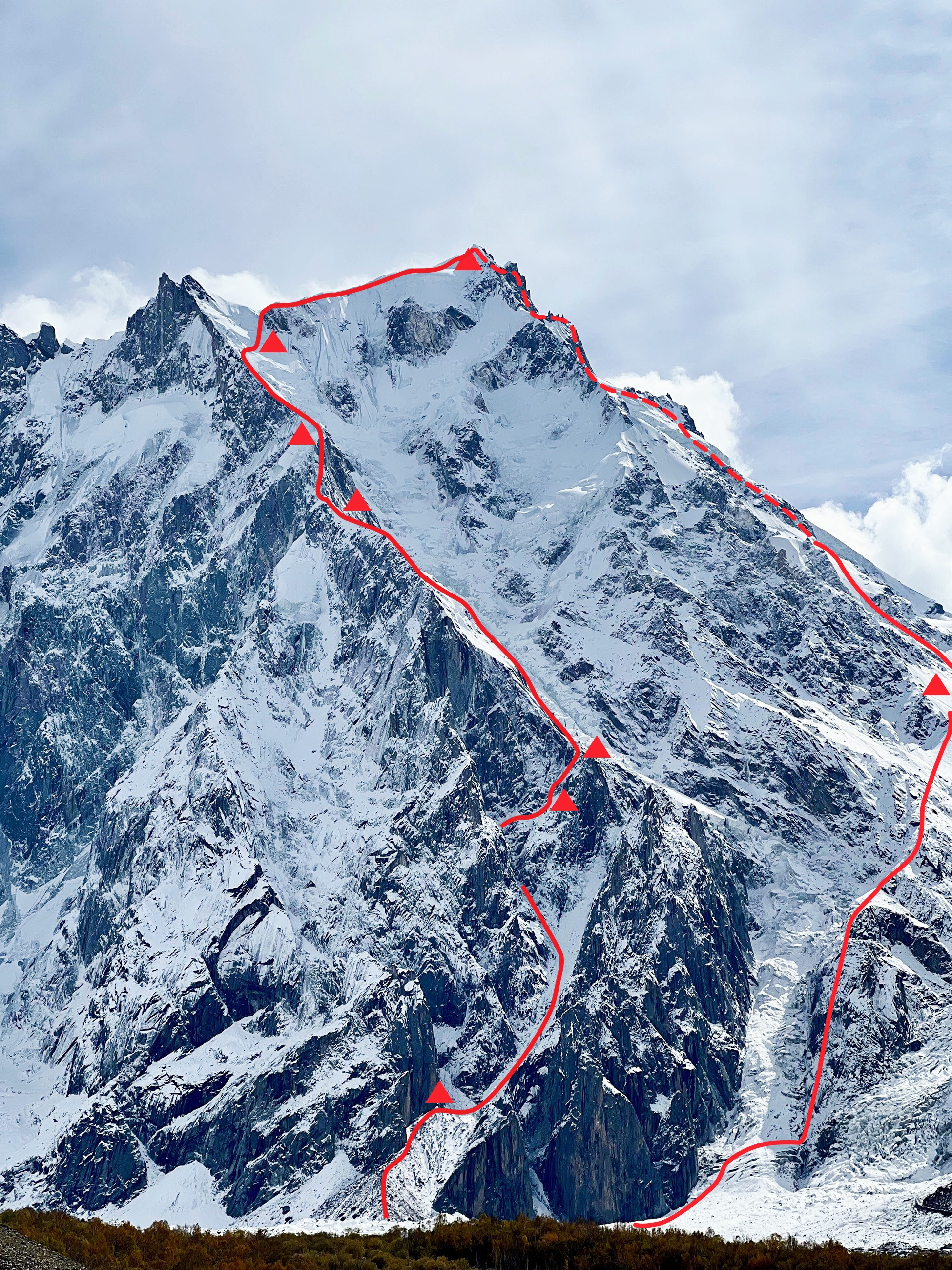
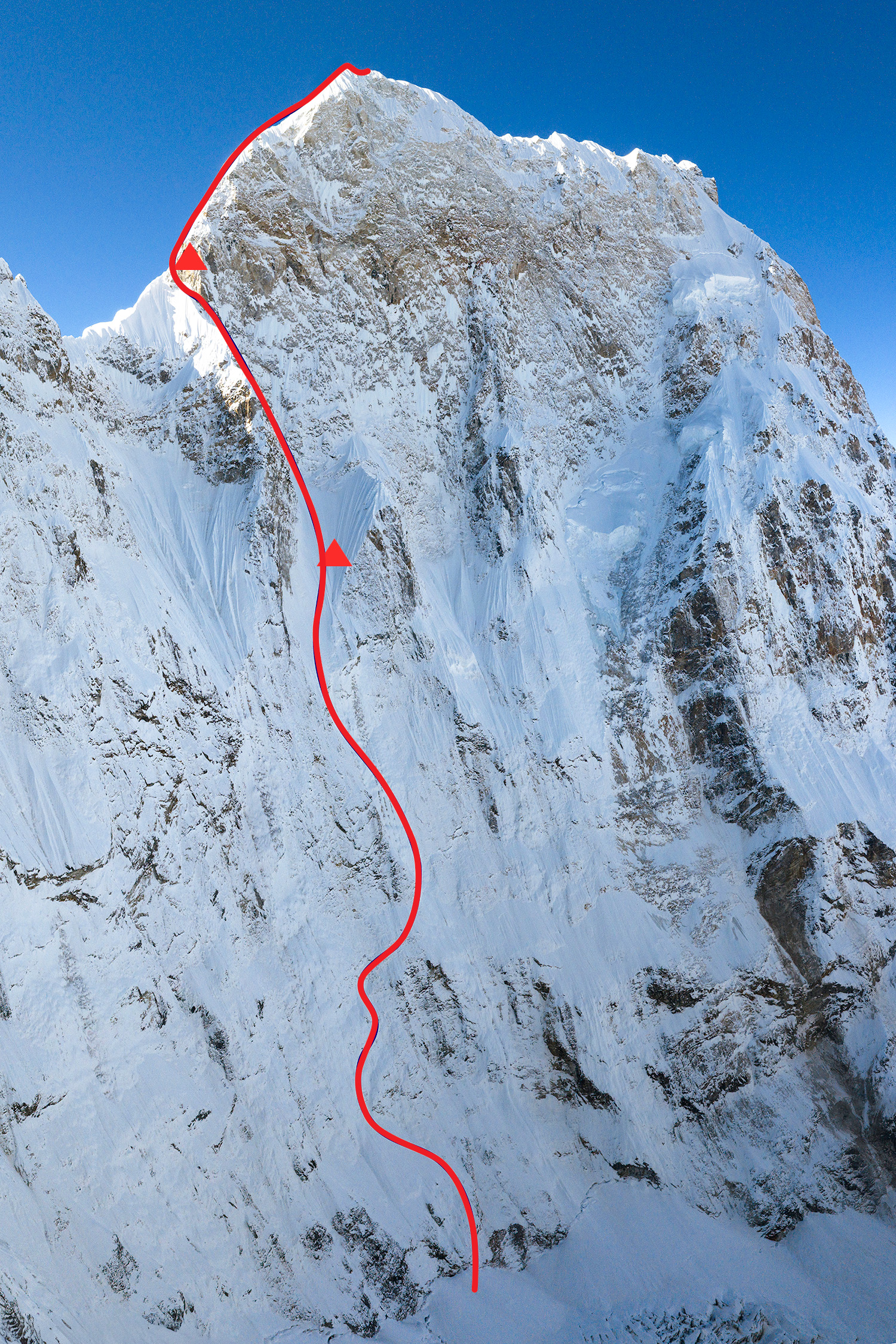
The first ascent of the southeast pillar of Ultar Sar, Batura Muztagh, via Shooting the Moon (3,100m, M5 WI4), June 6-11. The climbers descended the same route, reaching the base of the mountain on the 13th.

Ultar Sar rises around 5,000m above the village of Karimabad in the Hunza Valley, Western Karakoram. Despite the highest point lying no more than 10km from the Karakoram Highway, there is no easy route to the summit. After approximately 15 attempts, this complex mountain was eventually climbed in the summer of 1996, when two separate Japanese expeditions pioneered different routes from the south. However, starting in the early 1990s, ambitious parties had also attempted the elegant 3,100m southeast pillar rising out of the so-called, and difficult of access, Hidden Valley. After more than half a dozen attempts, the highest point reached prior to 2025 was 6,500m, by two Japanese alpinists in 2011.

Ethan Berman (USA-Canada), Maarten van Haeren (Canada) and Sebastián Pelletti (Australia) had the southeast pillar as their goal in 2024, reaching around half-height on their best attempt. They returned in 2025, and after acclimatizing up to 6,500m above the Batokshi Col south of Batura I, they left a base camp placed at 4,400m below Ultar Sar and headed into the glacial cwm below the pillar. On June 6, they started up the route and on the following days would typically "wake" at 10-11 p.m. and climb till around lunchtime to avoid the main heat of the day. The crux was the rock pillar above 6,650m, which gave relatively sustained mixed climbing on largely good granite and led to a final campsite at 7,150m. The three reached the summit at 9 a.m. on June 11 and rappelled to their previous 6,650m bivouac the same day. Unfortunately, bad weather forced them to wait there a day before continuing down, making a total of more than 70 rappels to reach the cwm below the pillar.

The jury noted this to be a beautiful and much attempted line with hard climbing at high altitude. It exemplified a very high level of commitment, self-sufficiency, spirit of exploration and team effort, fundamental criteria for a Piolet d'Or.
Aikache Chhok (6,673m), Pakistan Karakoram

©Price

The first ascent of the northwest face of Aikache Chhok, Batura Muztagh, via Secrets, Shepherds, Sex and Serendipity (3,000m, M7 A2+ AI5), October 12-20. The climbers traversed the mountain, descending unclimbed ground to the west and then north to regain base camp on the 21st.

In 2025, George Ponsonby (Ireland) and James Price (UK & France) were members of the British Young Alpinist Group, which concludes a three-year programme with an expedition to the Greater Ranges. Individual members of the group pitch their plans to the rest, and the most popular idea is chosen. Price made a relatively reluctant presentation on a valley north of the Hunza River he had never seen. To his dismay, everyone liked the idea and he was chosen to organize it.

In early September the team reached a base camp at a grazing pasture in the accessible but rarely visited (by mountaineers) Baltar Valley, then spent the next 10 days in largely poor weather looking for a suitable objective. They eventually decided on the prominent spur splitting the northwest face of a mountain they could clearly see from base camp: Aikache Chhok. It had been climbed only once before, in 1983, from a glacier basin to the south. Ponsonby and Price started up this spur on October 12. Prior bad weather had restricted their acclimatization ascents to an altitude of no more than 4,500m.

The two reached the summit early on their eighth day after strenuous and difficult ice and mixed climbing. Late on day four, unable to find either a tent site or a route above the day's high point, they were forced to retreat to their previous bivouac site and try again the following morning: fortunately, they discovered a better line. Over those two days they gained no more than 250m in altitude.

With their route having never been a realistic option for descent, the two traversed the summit and started rappelling a west-facing couloir. Two days later, after a bivouac at 5,000m and intricate route finding, they returned safely to base camp.

The jury recognized this ascent as a long and highly committing outing in a little-known part of the Karakoram by two young and spirited climbers. The pair exhibited great persistence on a route with much technical difficulty and almost zero chance of rescue. Due to the exploratory nature and complexity of the descent, the adventure continued all the way to base camp.

Yerupajá Grande (6,634m), Peruvian Andes

©Thom95

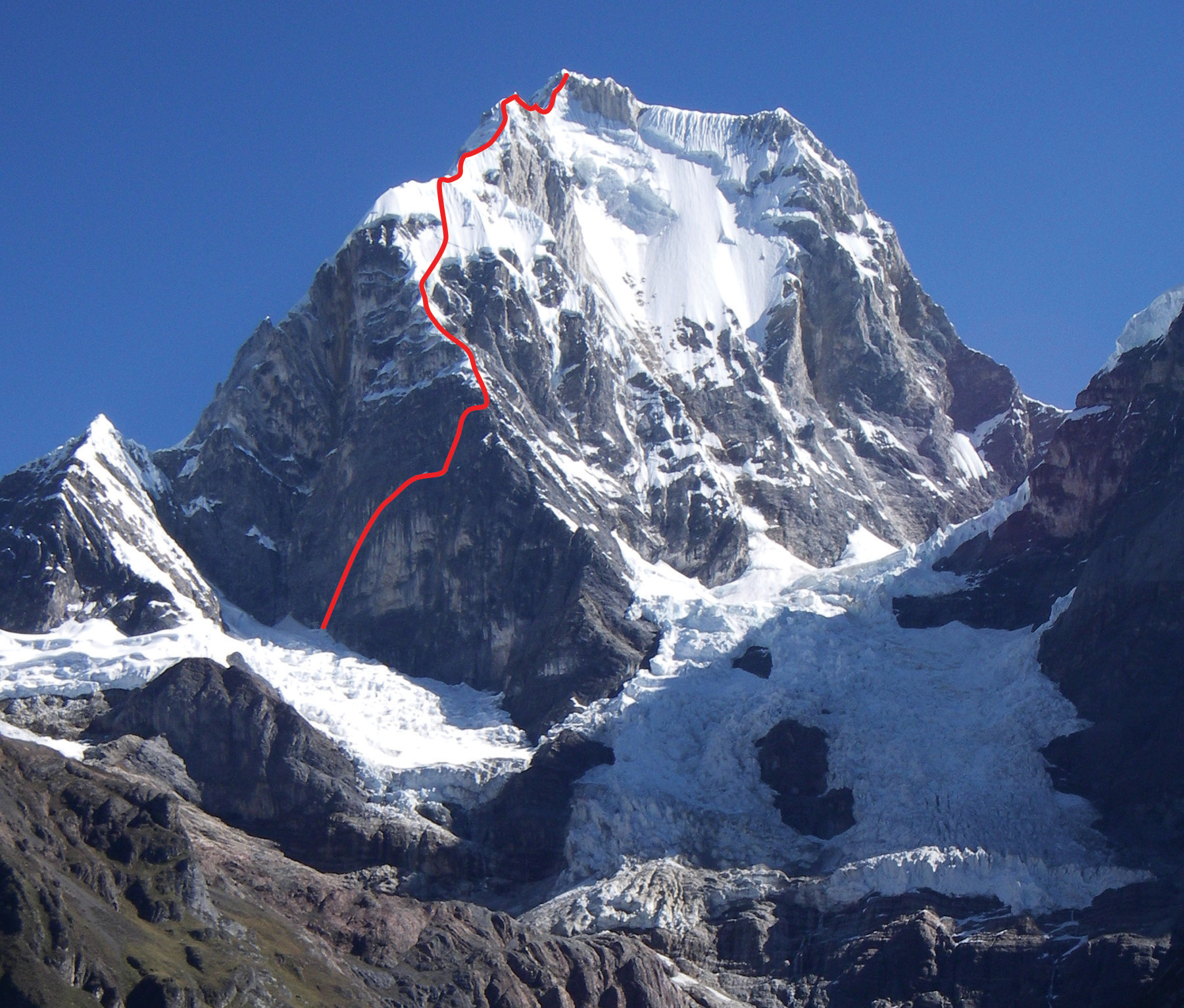
The first complete ascent of the east spur and east ridge via The Essence of Commitment (1,400m, 6c+ M6+ 95°) to the main summit of Yerupajá, Cordillera Huayhuash, followed by a traverse to Yerupajá Sur and descent of the southeast face (1,000m at an average angle of 65°). August 4-8 for the full traverse.

Yerupajá is the second-highest independent peak in Peru and the highest of the Cordillera Huayhuash. Although first climbed in 1950, due to the difficulty of any route the summit has seen few successful ascents; before 2025 the last known ascent was possibly as far back as 2014.

Spanish Catalans Bru Busom, Rubén Sanmartín, and Marc Toralles planned an ascent of the east spur and east ridge, followed by a ca 600m traverse south along the narrow, corniced ridge to Yerupajá Sur and descent of its southeast face.

The three first acclimatized in the Cordillera Blanca and then once at their 4,900m base camp below Yerupajá, reconnoitred the descent route on the southeast face by climbing up to 5,400m on the extremely crevassed glacier below, using a drone to show the safest line.

The upper part of the east spur, reached via glacier slopes to the northeast, was climbed in 1968 by Austrians, who continued up the east ridge to the summit. The 600m rock wall at the base of the spur had been climbed a few times by lines toward the right side but not continued up the ridge above. The Spanish alpinists started near the left side of the face and climbed a rightward slanting line, which involved a couple of pitches of 6c+ and then four of WI5 M6+. More pure rock to 6c+ took them to the east ridge and their first bivouac. From there, it would take the best part of three days to reach the summit, overcoming largely ungradable terrain – hanging glaciers, mushrooms, snow and ice overhangs - all with little in the way of meaningful protection. On reaching the east ridge, they knew that their eight snow stakes would not be nearly enough to rappel the ground already ascended. Their only "retreat" was over the summit.
On their fifth day, the climbers navigated the ca 600m-long mushroomed connecting ridge and reached Yerupajá Sur (6,480m) by midday. From there, they were able make numerous rappels of the southeast face via Abalakov and snowstake anchors, gain the glacier they had previously reconnoitred, and reach base camp that same day. They had made the first full traverse of the mountain from the east.

The jury was impressed that this team continues to pioneer audacious lines in the Southern Hemisphere, showing that top-quality adventures are still achievable outside the Himalaya. The traverse, which featured a high level of commitment, with no realistic possibility of retreat once on the upper ridge and a slim chance of external rescue should something go wrong, was completed in excellent style, with thorough preparation undoubtedly contributing significantly to their success.

Jannu East (7,460m), Nepal Himalaya

©Marot

The first ascent of Jannu East, Kangchenjunga Himal, via Le Sommet des Pieux (2,300m, M6 WI5) on the north face and east ridge, October 12-15. The climbers rappelled and downclimbed the route to reach the base of the mountain on the 16th.

The highest of the peaks awarded a Piolet d'Or this year, Jannu East is connected to the main summit of Jannu (7,710m) by a narrow, two-kilometre ridge. Jannu East has little prominence above the col with the main peak but has been a much-coveted objective for decades. Until very recently, most attempts had taken place on the east face, where the first, as long ago as 1991, reached above 7,000m. In 2022, Americans were the first to make a serious effort on an ambitious direct route up the steep and technical north face, and they would return for subsequent attempts in 2023 and '24. In 2024, French alpinists Léo Billon, Nicolas Jean and Benjamin Védrines also attempted the north face, but by a line further left that would reach the east ridge. They descended from 6,700m.

In 2025, Jean and Védrines returned, and in early September established a base camp at 4,700m in the valley below the north face. From here they acclimatized by ascending a 6,000m subsummit of Merra and making a one-day first ascent of Anidesh Chuli (6,808m), a nearby peak that had also rebuffed previous parties. Their ascent of the north ridge (1,140m, TD) took more than seven hours.

The pair planned a route on Jannu that would play to their proven ability to climb light and fast. On October 12, they camped at 5,100m on the glacier below the face and fixed the first pitch. Next day, they climbed 1,100m through hanging snowfields, steep snow, WI5 and a tenuous mixed pitch of M6. Much of the terrain was poorly protected. From a bivouac at 6,200m, they slanted left to reach the east ridge at 6,900m, where they spent the night. Next day, precarious climbing along the narrow and heavily corniced ridge above led to the summit. Descending their line over the next one and a half days required around 50 rappels and downclimbing.

Jannu East is a high mountain with much history, and the north face consistently steep with few opportunities for secure protection. Jury members felt it was climbed in perfect lightweight style, demanding a high level of technical competence for a successful completion. It is an excellent example of the athleticism achieved by today's modern professional mountaineers, executed in a remote and committing location.

2026 Special Mention for Female Mountaineering

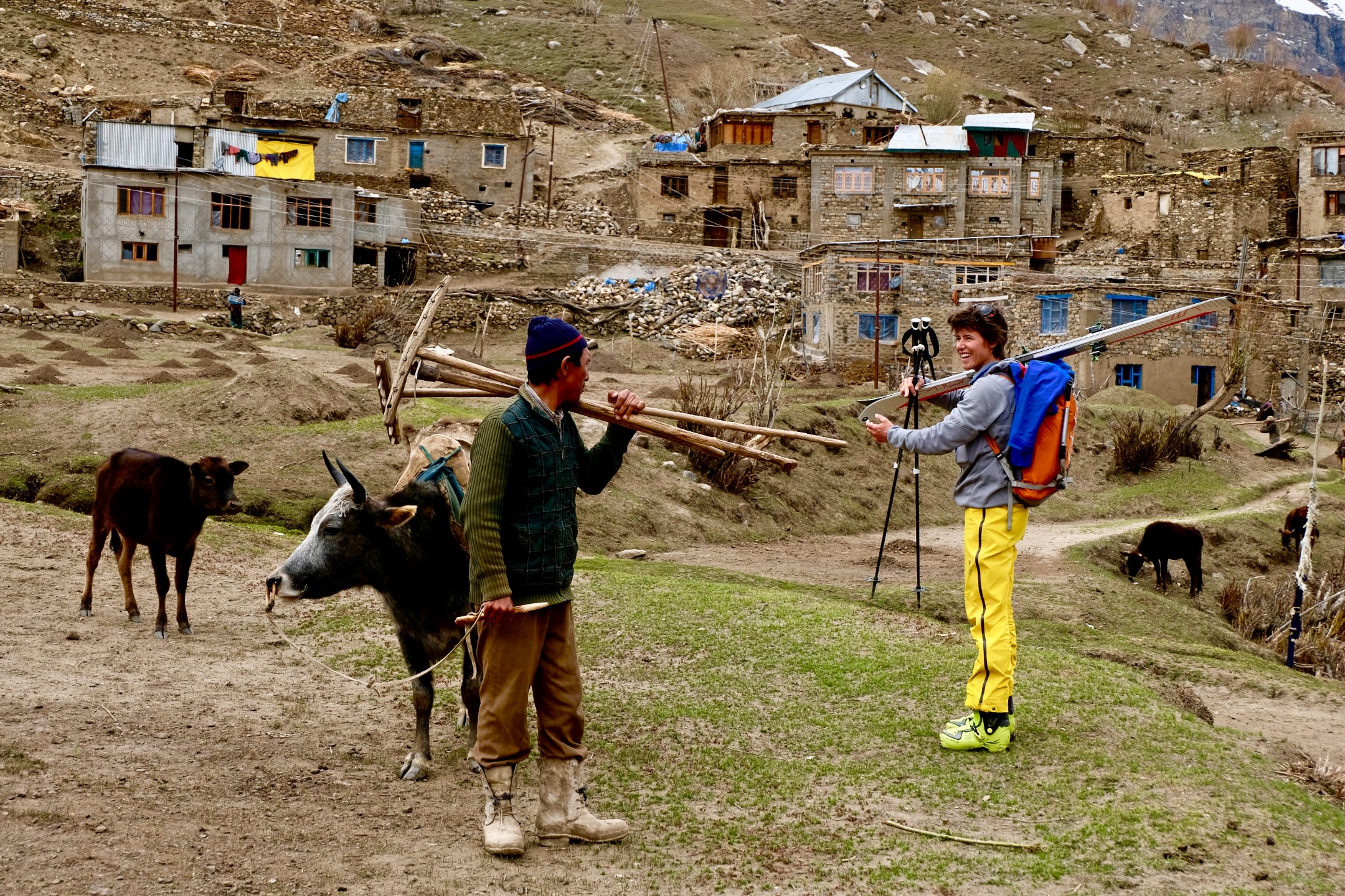
East meets West: Tiphaine Dupérier in Nepal.
©Boris Langenstein

The Piolets d’Or aims to promote women’s alpinism through a Special Mention, which may recognise an all-female expedition completing a significant ascent in the Greater Ranges, women taking a leading role in a significant mixed-team ascent, or an individual woman for an outstanding body of mountaineering achievements over the years. In 2026 the mention is for a single female – Tiphaine Dupérier from France.

 ***

Tiphaine Dupérier

In 2025, arguably one of the most significant ascents – and descents – at altitude by a female alpinist was the first alpine style ascent of the Schell Route on the Rupal flank of Nanga Parbat followed by the first ski descent from the 8,125m summit.

Tiphaine Dupérier is a mountain guide and ski patroller originally from the Bauges and now living in the Haute Tarentaise. She was a past member of the Groupe Excellence Alpinisme National (GEAN) – the elite training programme run by the French Alpine Club. She is now probably best known for extreme ski descents at high altitude in the Greater Ranges.

Dupérier, with her long-time partner Boris Langenstein, first attempted Nanga Parbat in 2019. On their first summit attempt via the standard Kinshofer Route, deteriorating weather forced them down, Dupérier from just below 8,000m and Langenstein from 8,040m. On the subsequent attempt Langenstein reached the summit and skied from 8080m, rejoining Dupérier who had stopped around 7,800m.

In 2024 they returned to try the Rupal side of the mountain and with the German, David Goettler, were forced to retreat from 7,524m on the 1976 Schell Route, which had received less than 10 ascents.

All three returned in 2025, after previously acclimatizing in Nepal. From June 21-24 they made the first alpine style ascent of the ca 3,500m Schell Route. Dupérier and Langenstein skied off the summit: Goettler hoped to paraglide, but it was too windy. He accompanied them to 7,700m, where he deployed the wing and was able to reach base camp in around half an hour. Lack of snow at one point on this section meant that Dupérier and Langenstein had to remove skis for a short distance; they also made a 30m rappel. The rest was skied. The two spent the night at 7,600m, having carried a tent, mattress and stove (but no sleeping bag), as well as skis, to the summit.

The following evening, they camped at 7,400m, and on the 26th reached 6,000m, having skied almost all the way. Due to the heat, the terrain below this point looked like a battlefield and by a combination of skiing in survival mode, some rappels, and a bit of downclimbing, they reached 4,500m, from where they walked to base camp.

Dupérier and Langenstein had completed a seven-year dream, which all three climbers felt might be the highlight of their mountaineering careers to date.

Naturally, in the Alps, Dupérier has achieved many significant ski descents as well as a number of ascents as part of an all-female team, such as the Ratti-Vitali on the west face of the Aiguille Noire de Peuterey (Mont Blanc), a winter ascent of the south ridge of the Aiguille Noire de Peuterey, a winter ascent of the Innominata Ridge (Mont Blanc), Beyond Good and Evil (Aiguille des Pélerins), and the north face of the Matterhorn. Of the many steep ski ascents, notable is the new combination on the north face of the Aiguille Blanche de Peuterey, descended without any rappels, with Vivian Bruchez, Tom Lafaille, Boris Langenstein and Guillaume Pierrel.

Below is a list of Dupérier's achievements, mostly in the Greater Ranges. Nearly all have been with Boris Langenstein, who describes their relationship:

"I was lucky enough to cross paths with Tiphaine at high school and since then we have shared a big part of our adventures. Our relationship is much more than simply that of being climbing partners.

Even in school, her charm and personality rarely left people indifferent. She already had that strong body and steel mindset that are made for big expeditions.

However, what I value most about Tiphaine is the person she is with me: she worries about me, takes care of me, and is always attentive. I know I can count on her. In expeditions as in life.

After all these years, maybe that’s what matters most to me: knowing that she’s there.

Tiphaine, even if your ego probably didn’t need it, I’m really happy that you’re getting this recognition."


2014 - Kyrgyzstan, Karavshin

A possible new route (1,300m, M5 WI5) on the north face of Pik Piramidalny (5,509m) to an exit onto the east ridge, down which they escaped.

With: Robin Coullet, Jonathan Isoard and Christophe Moulin. Other routes climbed.


2017 - India, Zanskar Region

  • Probable first ascent of Peak 5,550m and ski descent of the 1,200m north face.
  • Ski descent of the north face of Peak 5,900m.
  • Ascent of the northwest face of Peak 6,050m and ski descent via the northwest face (1,800m).
  • Ski descent of the northwest face of Nun (7,135m).

With: Boris Langenstein.


2018 - Pakistan, Masherbrum Range

First complete ski descent of Laila Peak (6,096m) via the northwest face — a coveted first ski descent amongst top-class steep skiers.

With: Carole Chambaret and Boris Langenstein.


2019 - Pakistan, Spantik–Sosbun Range

First ski descent of Spantik (7,027m) via the normal route on the southeast ridge.

With: Boris Langenstein.


2019 - Pakistan, Himalaya

Alpine-style ascent of the Kinshofer Route on Nanga Parbat to 7,800m, followed by a ski descent of the Kinshofer Route.

With: Boris Langenstein.


2020 - Iceland, Vatnajökull Glacier

South-to-north ski crossing of the glacier and packraft descent of the Jökla River through the Hafrahvammagljúfur Canyon.

With: Nouria Newman and Boris Langenstein.


2021 - Pakistan, Rakaposhi Range and Hindu Raj

  • First ascent of the northwest ridge of Darchan (5,347m) and ski descent.
  • First ascent of Peak 5,040m and ski descent.
  • Partial new line on the northwest couloir of Garmush I (6,244m) and first ski descent.
  • First ascent of the southwest face of Garmush II (6,180m) and ski descent.

With: Aurélia Lanoë, Boris Langenstein and Guillaume Pierrel.


2021 - Pakistan, Baltoro Muztagh

First ski descent of the French Spur on Gasherbrum II (8,035m).

With: Aurélia Lanoë, Boris Langenstein and Guillaume Pierrel.


2022 - Alaska, Central Alaska Range

A ski descent of the southwest face of Denali (6,190m) via the Cassin Exit, McCartney–Roberts Route, West Rib and then Chicken Corridor, possibly the first descent of this line.

With: Boris Langenstein.


2022 - Nepal, Dhaulagiri Himal

Attempt on unclimbed Sita Chuchura West (6,622m) to 6,400m, followed by a ski descent of the southwest face.

With: Boris Langenstein.


2023 - Georgia, Caucasus

First ski descent of the northwest face of a 4,450m sub-summit of Ushba (4,710m).

With: Nouria Newman.


2025 - Nepal, Mahalangur Himal, Barun Section

Ascent of Baruntse (7,152m) as acclimatization for Nanga Parbat. Skiing from 6,800m down to around 6,000m.

With: David Goettler and Boris Langenstein.


2025 — Pakistan, Himalaya

First alpine-style ascent of the Schell Route on Nanga Parbat (8,125m) and the first ski descent from the summit. This was also the first ski descent on the Rupal side of the mountain.

Ascent: with David Goettler and Boris Langenstein.
Descent: with Boris Langenstein.

2026 Organizers